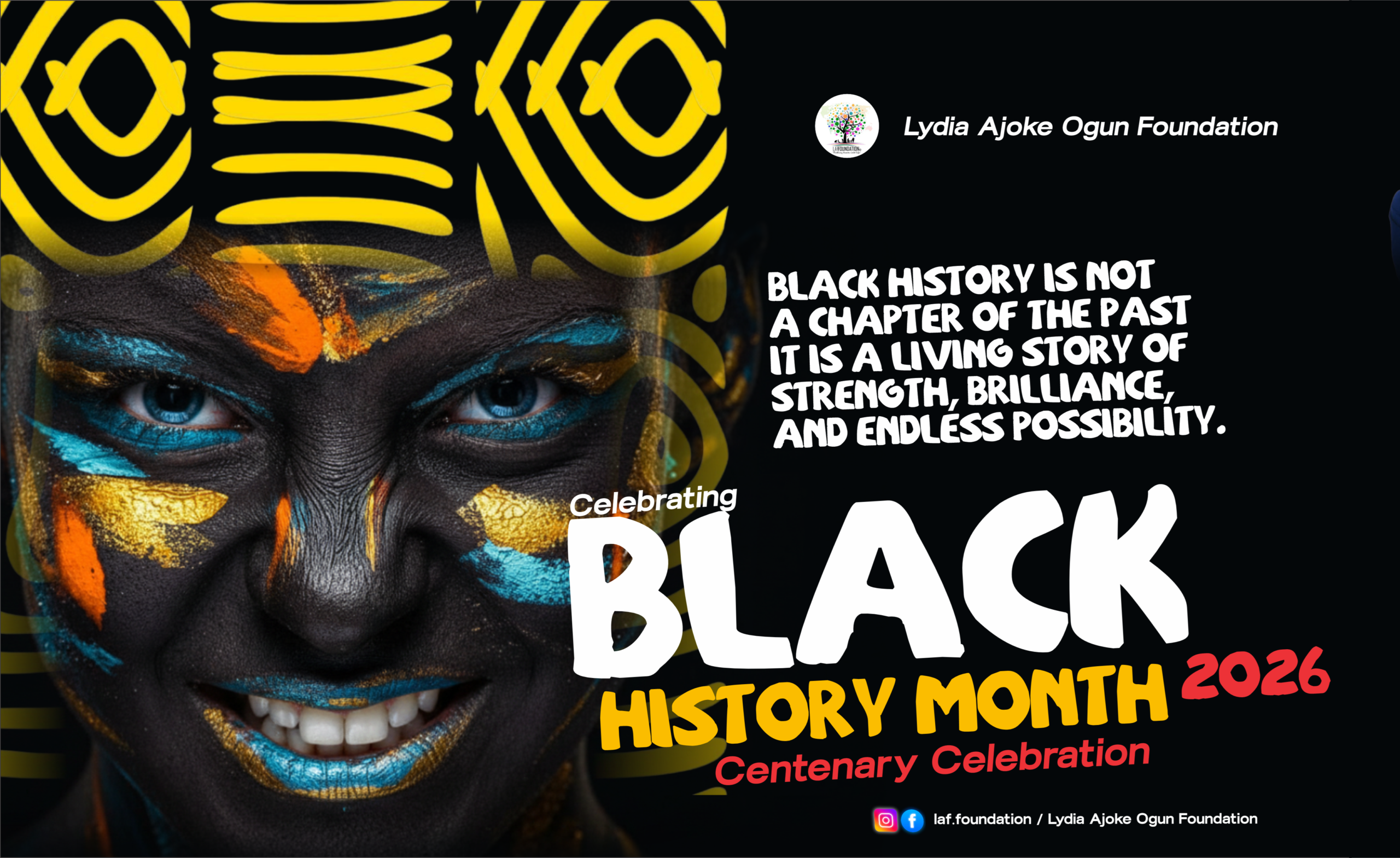
Black History Month Quiz Challenge Black History Month is more than a celebration, it is a time of reflection, remembrance, and rigorous learning. It invites us to examine the depth of African civilizations, the courage of freedom fighters, the brilliance of inventors, the influence of artists, and the resilience of communities that shaped global history. This quiz is designed not just to test memory but to challenge understanding. Each question explores the historical, cultural, political, and intellectual contributions of Black leaders and societies across Africa and the diaspora. Engage thoughtfully. Think critically. Let history speak, and let it strengthen your perspective. Quiz Rules & Leaderboard Criteria Kindly note that this Black History Month Quiz is both a knowledge and time-based challenge. Participants are expected to complete the test independently and within the allotted time. Scoring will be based primarily on the number of correct answers. However, in the event of a tie, timing becomes the deciding factor. For example, if Seun completes the quiz and scores 15 points, and Timileyin also scores 15 points afterward, the participant who completed the test in the shortest time will rank higher on the leaderboard. The leaderboard will therefore be determined by: 1. Total Score (Highest to Lowest) 2. Completion Time (Fastest ranks higher in case of equal scores) 3. Avoid the use of Artificial Intelligence. Participants are encouraged to balance accuracy with speed. Take your time to think critically but remember, efficiency matters. Full Name Email Phone Number Instagram Handle Address 1. ___________ demonstrated that Black resistance could take cultural form by transforming music into a political platform that challenged military dictatorship, corruption, and neocolonial influence in post-independence Africa. Hugh Masekela Fela Aníkúlápó Kuti Miriam Makeba Bob Marley None 2. Funmilayo Ransome-Kuti’s political mobilization in Abeokuta primarily challenged which system of authority during colonial Nigeria? French indirect rule administration British taxation policies and the Alake’s traditional authority Portuguese trade monopolies Military dictatorship under post-independence rule None 3. Funmilayo Ransome-Kuti is best remembered in Nigerian and African history for her organised resistance against colonial and traditional authorities, particularly through the Abeokuta Women’s Union. Her activism primarily focused on: Leading armed military resistance against British rule Campaigning for women’s political representation, tax justice, and social reform Establishing Nigeria’s first political party Promoting missionary education in rural communities None 4. ___________ rose from being a community organizer to becoming the first Black president of the United States in 2008, symbolizing a historic shift in representation and political coalition. Colin Powell Jesse Jackson Barack Obama Thurgood Marshall None 5. ___________ was a NASA mathematician whose calculations were critical to John Glenn’s orbital mission and the Apollo 11 moon landing, proving that Black excellence extended into the highest levels of science. Mae Jemison Katherine Johnson Dorothy Vaughan Mary Jackson None 6. Black History Month encourages society to: Ignore past injustices Focus only on politics Recognize contributions often overlooked in history Study only African history None 7. The renaming of Upper Volta to Burkina Faso symbolized a broader rejection of __________ and an embrace of indigenous identity and post-colonial dignity. Pan-Africanism tribal federalism colonial nomenclature industrialization None 8. Which pre-colonial African kingdom was renowned for its advanced bronze casting techniques and intricate royal artworks that later challenged Western misconceptions about African technological sophistication? The Zulu Kingdom The Kingdom of Kush The Benin Kingdom The Oyo Empire None 9. When examining figures such as Fela Kuti, Patrice Lumumba, and Thomas Sankara together, their leadership collectively represents resistance against: Cultural modernization Military training Political corruption and external domination Industrial expansion None 10. Chinua Achebe’s Things Fall Apart is widely regarded as a foundational text in African literature because it primarily sought to: Romanticise pre-colonial African societies without acknowledging internal tensions Present a counter-narrative to colonial literature by portraying African society as complex, organised, and philosophically grounded before European intervention Promote Western education as the only path to African progress Depict colonial rule as a necessary stage in African development None 11. Black History Month was originally established to address which historical gap? The absence of African political systems in global governance The systematic exclusion of Black contributions from mainstream historical narratives The underrepresentation of African art in museums The need to celebrate independence movements None 12. ___________ escaped slavery in 1849 by shipping himself in a wooden crate from Richmond to Philadelphia, turning his act of survival into a powerful abolitionist testimony. Frederick Douglass Nat Turner Henry “Box” Brown Sojourner Truth None 13. Which artist intentionally withdrew from mainstream visibility after the massive success of Voodoo, later returning with Black Messiah, a project widely interpreted as a response to racial injustice and the weight of symbolic representation placed on Black artists? D'Angelo Maxwell Lauryn Hill D. John Legend None 14. ___________ improved urban safety by inventing a three-position traffic signal and also created a safety hood that saved lives from smoke inhalation. Granville Woods Garrett Augustus Morgan Elijah McCoy Lewis Latimer None 15. ___________ rejected luxury and reduced his own presidential salary, sold government luxury cars, and encouraged domestic production in order to model integrity and economic self-reliance for his nation. Julius Nyerere Nelson Mandela Thomas Sankara Robert Mugabe None 16. Black History Month was established in 1926 as “Negro History Week” to counter the systematic exclusion of Black contributions from mainstream historical narratives. Who founded this initiative? W.E.B. Du Bois Martin Luther King Jr. Carter G. Woodson Frederick Douglass None 17. The Abeokuta Women’s Union, led by Funmilayo Ransome-Kuti, is historically significant because it: Focused solely on religious reform Was one of the earliest organised mass movements of women demanding political and economic rights in West Africa Functioned as a paramilitary resistance group Operated under direct colonial sponsorship None 18. Garrett Augustus Morgan’s traffic signal invention significantly impacted: Agricultural productivity Urban industrial safety and transportation regulation Naval engineering International trade treaties None 19. ___________ not only built personal wealth but established training programs and employment networks that economically empowered thousands of Black women during a period of racial and gender exclusion. Ida B. Wells Madam C.J. Walker Rosa Parks Ella Baker None 20. __________ believed that political independence without economic control was incomplete. As Prime Minister of Congo in 1960, he emphasized sovereignty over natural resources and rejected foreign manipulation during the Cold War, a position that contributed to his removal and eventual assassination. Kwame Nkrumah Patrice Lumumba Thomas Sankara Léopold Senghor None 1 out of 20 Black history is not confined to a month, a classroom, or a timeline , it is a living narrative woven into the foundations of global civilisation. The stories you have engaged with reflect courage in the face of oppression, innovation in the midst of limitation, and leadership grounded in conviction. If this quiz has challenged you, let it also deepen your curiosity. Behind every answer is a broader story, one of resilience, intellect, culture, and vision. Black History Month reminds us that understanding the past is essential to shaping a just and informed future. May these lessons inspire you not only to remember history, but to honour it through knowledge, excellence, and purposeful action.