

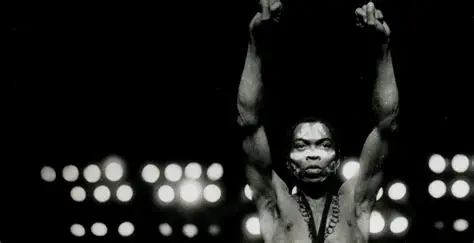
Fela Aníkúlápó Kuti: The Revolutionary Rhythm of Black History
Black History Month is a time to honour those whose lives transformed the cultural, social, and political landscape of Black communities around the world. Few figures embody resilience, bold creativity, and unflinching defiance like Fela Aníkúlápó Kuti, the Nigerian musician, activist, and pioneer of Afrobeat whose legacy continues to shape global music and resistance culture.
Born in 1938 in Abeokuta, Nigeria, Fela was raised in a family that valued education and activism; his mother, Funmilayo Ransome-Kuti, was a prominent political advocate. From an early age, Fela displayed a natural affinity for music, eventually travelling to London in the late 1950s to study. It was there that he first encountered highlife, jazz, and funk, sounds that would later converge into his own revolutionary genre: Afrobeat.
Afrobeat was more than music; it was a vehicle for commentary. Combining jazz horns, complex rhythms, traditional African percussion, and extended grooves, Fela crafted a sound that was unmistakably African yet globally compelling. But what set his work apart was not just its musical inventiveness, it was his message.
Upon returning to Nigeria, Fela quickly became known for songs that spoke directly to corruption, inequality, and authoritarian rule. Tracks like “Zombie” and “Upside Down” were not polite critiques, they were bold indictments of military regimes and societal oppression. Fela didn’t hide behind metaphor; he named systems and structures that denied dignity to ordinary people. His music became a rallying cry for those who yearned for truth and justice.
This outspokenness brought consequences. Throughout the 1970s and 1980s, Fela faced repeated arrests, harassment, and violent confrontations with Nigerian authorities. His commune, the Kalakuta Republic, was raided, and his mother was tragically injured. Yet even in the face of intimidation, Fela refused to be silenced. His resilience was woven into his art and his life.
Fela’s influence extended beyond Nigeria. In the United States, his recordings and performances resonated with Black power activists and musicians alike. His refusal to accept injustice connected with audiences confronting their own histories of marginalization. Fela’s rhythms echoed in the civil rights struggle, in student movements, and in cultural exchanges across continents.
Today, Fela’s legacy is preserved not only in his music but in the generations of artists and activists who draw strength from his example. Afrobeat has become a global phenomenon, inspiring musicians from Lagos to London to New York. Festivals, documentaries, and academic studies continue to explore his impact on sound, identity, and resistance.

In celebrating Black History Month, Fela Aníkúlápó Kuti reminds us that Black history is not only about what was done to people, but what people did in response. It is a story of creativity in the face of constraint, of confidence confronting coercion, and of community rising above individual fear. Through his life, music became more than entertainment; it became a testament to the power of voice.
Fela’s story teaches us that art can be a form of liberation and that resilience can transform pain into purpose. As Black History Month highlights achievements and reckonings across time, Fela’s work stands as a powerful example of how one person’s commitment to truth and strength can rewrite narratives and inspire generations.