Patrice Lumumba: The Uncompromising Voice of African Independence
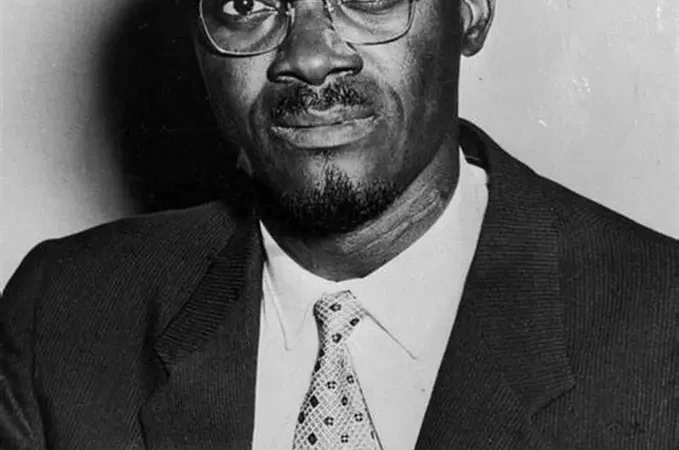
Black History Month is not only about celebrating achievements; it is also about remembering the sacrifices made in the struggle for freedom and dignity. Among Africa’s most powerful voices for independence stands Patrice Lumumba, the first Prime Minister of the Democratic Republic of the Congo and a lasting symbol of resistance against colonial domination.
Born in 1925 in Onalua, in what was then the Belgian Congo, Lumumba grew up under one of the most exploitative colonial systems in Africa. The Congo was rich in natural resources rubber, minerals, and later uranium, yet its people endured forced labour, violence, and economic exclusion. Lumumba witnessed firsthand how colonial rule extracted wealth while denying Africans political power and human dignity. These realities shaped his political consciousness and his determination to fight for genuine independence.
In the late 1950s, as waves of liberation movements swept across the continent, Lumumba emerged as a leading nationalist figure. He founded the Mouvement National Congolais (MNC), advocating for a united Congo free from tribal division and foreign control. His message was clear: independence must not be symbolic. It must restore political authority, economic control, and national pride to the Congolese people.
When the Congo gained independence from Belgium on June 30, 1960, Lumumba delivered a speech that would define his legacy. While Belgian officials spoke of a peaceful transfer of power, Lumumba boldly reminded the world of the suffering endured under colonial rule. He spoke of forced labour, humiliation, and injustice, declaring that Congolese independence had been won through struggle. His words were direct, unapologetic, and deeply rooted in truth. That speech resonated across Africa and the diaspora as a declaration of dignity.
However, independence brought immediate instability. Regional tensions, secessionist movements, and Cold War politics created a volatile environment. Lumumba’s insistence on full sovereignty, especially over Congo’s vast mineral resources placed him at odds with powerful international interests. Within months, he was removed from office, arrested, and in January 1961, assassinated. His death shocked the continent and transformed him into a martyr of African liberation.
Though his time in leadership was brief, Lumumba’s impact has endured for decades. He became a symbol of uncompromising resistance, representing the belief that African nations deserve full control over their political and economic destinies. Across Africa, streets, universities, and institutions bear his name. His speeches continue to inspire movements calling for justice, unity, and self-determination.
During Black History Month, Patrice Lumumba’s story reminds us that freedom often comes at great cost. His life challenges us to reflect on the deeper meaning of independence beyond flags and ceremonies, to include economic empowerment, national unity, and cultural pride. He represents a generation of African leaders who confronted colonial systems with courage, clarity, and conviction.
Lumumba’s legacy also speaks to the broader Black experience. It highlights the global dimension of Black history, connecting struggles in Africa to movements in the Caribbean, the Americas, and beyond. His vision of unity and dignity remains relevant in conversations about sovereignty, leadership, and justice today.
Patrice Lumumba may have led for only a short time, but his voice continues to echo across history. He stands as a reminder that leadership rooted in truth and courage can outlive even the most determined opposition. Black history is shaped not only by long reigns of power, but by moments of fearless conviction and Lumumba’s life remains one of those defining moments.